Record added successfully


Tucked within the lush northern landscapes of Wadi Ziqlab, a remarkable archaeological site is offering new insight into the deep human history of the region—revealing a story that stretches from the Epipalaeolithic era to the Late Neolithic period.
First identified during a subsurface survey in 1987, the site came to light when archaeologists excavated a small test trench along a stream terrace. Their work uncovered a slab-covered cist grave containing the fragile skeletal remains of two adults, accompanied by a collection of ceramic and stone vessels, a grinding slab, and a pierced stone disk believed to have been used as a spindle whorl.
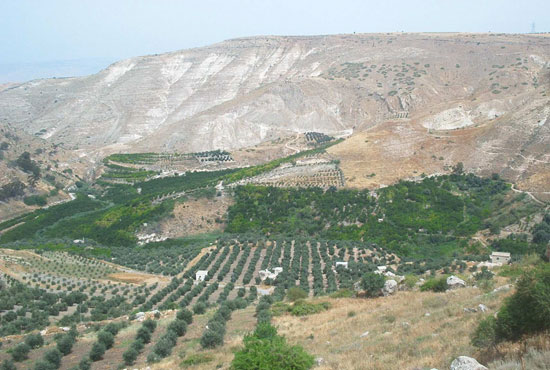
What makes Wadi Ziqlab particularly fascinating is the coexistence of artefacts from different prehistoric periods. Alongside delicate Epipalaeolithic microliths—small, finely crafted stone tools—researchers also found distinctly Neolithic implements, pointing to multiple phases of human occupation over thousands of years.
According to Kevin Gibbs, detailed stratigraphic analysis has allowed researchers to divide the Late Neolithic occupation into five separate phases. These phases reflect cycles of construction and rebuilding, offering a glimpse into how ancient communities adapted their living spaces over time.
Interestingly, the site’s history does not end in prehistory. Evidence suggests it was intermittently used in later periods, including classical times, and even more recently by local communities and the Jordanian army during the mid-20th century.
Today, Wadi Ziqlab stands as a quiet yet powerful reminder of Jordan’s layered past. For travelers seeking more than just iconic landmarks, this lesser-known site offers a deeper connection to the region’s earliest inhabitants—set against a backdrop of scenic valleys and flowing streams that make northern Jordan a rewarding destination to explore.